I Built a Customer Success AI Co-Pilot
I built an AI co-pilot for Customer Success.
Every CSM I know does this: dig through old files, hunt for that one template, start from scratch, brainstorm a plan, respond to the same type of email, rinse, repeat.
So I built an AI tool to fix it.
After a nice, long sabbatical spent traveling and reconnecting with family and friends, I’m looking for my next challenge. The time off was good for me.
But I’m not good at sitting still. So I started building something that I wish I had years ago.
I’ve spent years in enterprise Customer Success; managed portfolios with ARR north of $5M; and written hundreds of renewal emails, QBR decks, success plans, strategy docs, and executive summaries. Every time, it is the same inefficient cycle.
Customer Success Retriever: A Co-Pilot for Your Accounts
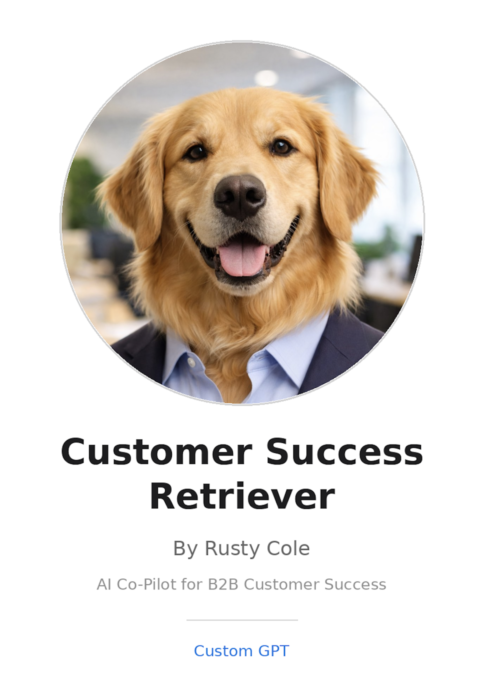
The AI tool is called Customer Success Retriever. Think of it as a co-pilot for B2B Customer Success. Provide context about your account, situation, and goals. It drafts the email, talk track, success plan, or QBR deck, or just about anything you want for a customer. It brainstorms a strategy with you.
The build took longer than I want to admit, and I’ve learned a ton about Gemini, ChatGPT, Claude, and other AIs, and how they can all work together to build on their own strengths. After 11 versions of instructions, varying knowledge files across multiple categories. I broke it, fixed it, stress-tested it, broke it again. It didn’t break me; it inspired me to get it just right.
It’s not magic; it’s a tool. One that understands the Customer Success craft because I fed it years of hard-won lessons. This isn’t theory, it’s reality that’s worked for me and others I coached over my career.
Who It’s For
I built it for myself first. I’m sharing because other CSMs, Account Managers, and AEs may find it useful too.
If you’re in Customer Success or Sales, try it out and let me know what you think.
More posts coming on what I learned building it. The technical tradeoffs. The failures. What surprised me about prompt engineering is that when you go deep, you discover that it’s not just about the prompt.
What’s Next
For now: I made a thing. It felt good to build again.
What’s something you’ve built during a career transition?